World’s largest fashion brands failing to deliver on living wage promises
The seventh edition of Fashion Checker, a living wage monitoring project from Clean Clothes Campaign, was released this week to coincide with Living Wage Action Day.
The 2026 release updates the brand living wage and transparency scores, key living wage indicators and a new section on the brand profile on industry initiatives, due diligence regulations and grievance mechanisms.
32% of 110 brands have made a living wage commitment, but only 4% reported that they have made tangible progress on living wages.
Supply chain transparency is improving, with 41% of brands assessed disclosing supply chain facility data - an increase of 28% since 2020. Crucially, only 3% disclose wage levels at their supply chain facilities.
Worker surveys1 continue to show huge gaps between actual and living wages, with workers surveyed earning 73% less than a living wage in Bangladesh, 74% less in Pakistan, 63% less in Serbia and 66% less in Turkey.
Over one quarter (27%) of brands assessed are expected to be in scope of the EU Corporate Sustainability Due Diligence Directive (CSDDD) when it takes effect in 2029, but only 3% of these brands currently have a living wage action plan in place.
One quarter (25%) of brands do not have a publicly accessible grievance mechanism that can be used by workers to safely report workplace concerns, including wage violations.
Through the project, Clean Clothes Campaign has analysed brand living wage statements alongside wage data and testimony from worker surveys. Despite one third of brands making living wage commitments, workers surveyed continue to earn only a fraction of a living wage.
“Only garment workers know what we have to endure. For every taka we earn, we must put up with humiliation and harassment. But we keep our mouths shut and head down so we can earn enough money to feed our families. But these days, the cost of essentials has gone beyond our control, so all of this hard work, what’s it for, if we can’t even eat three proper meals a day.”
- A garment worker in Bangladesh, supplying major brands including Next, Hugo Boss and Marks & Spencer
New EU due diligence legislation recognises ‘an adequate living wage’ as a human right, yet Fashion Checker finds companies are currently ill-prepared to fulfill their obligations on living wage.
The EU Corporate Sustainability Due Diligence Directive (CSDDD) will apply to companies from 2029 and includes clauses on living wage. Fashion Checker finds that 30 out of the 110 brands (27%) will likely fall in scope of the CSDDD legislation, yet only 3% of these companies have a public living wage action plan and 13% of them have no publicly available grievance mechanism for workers.
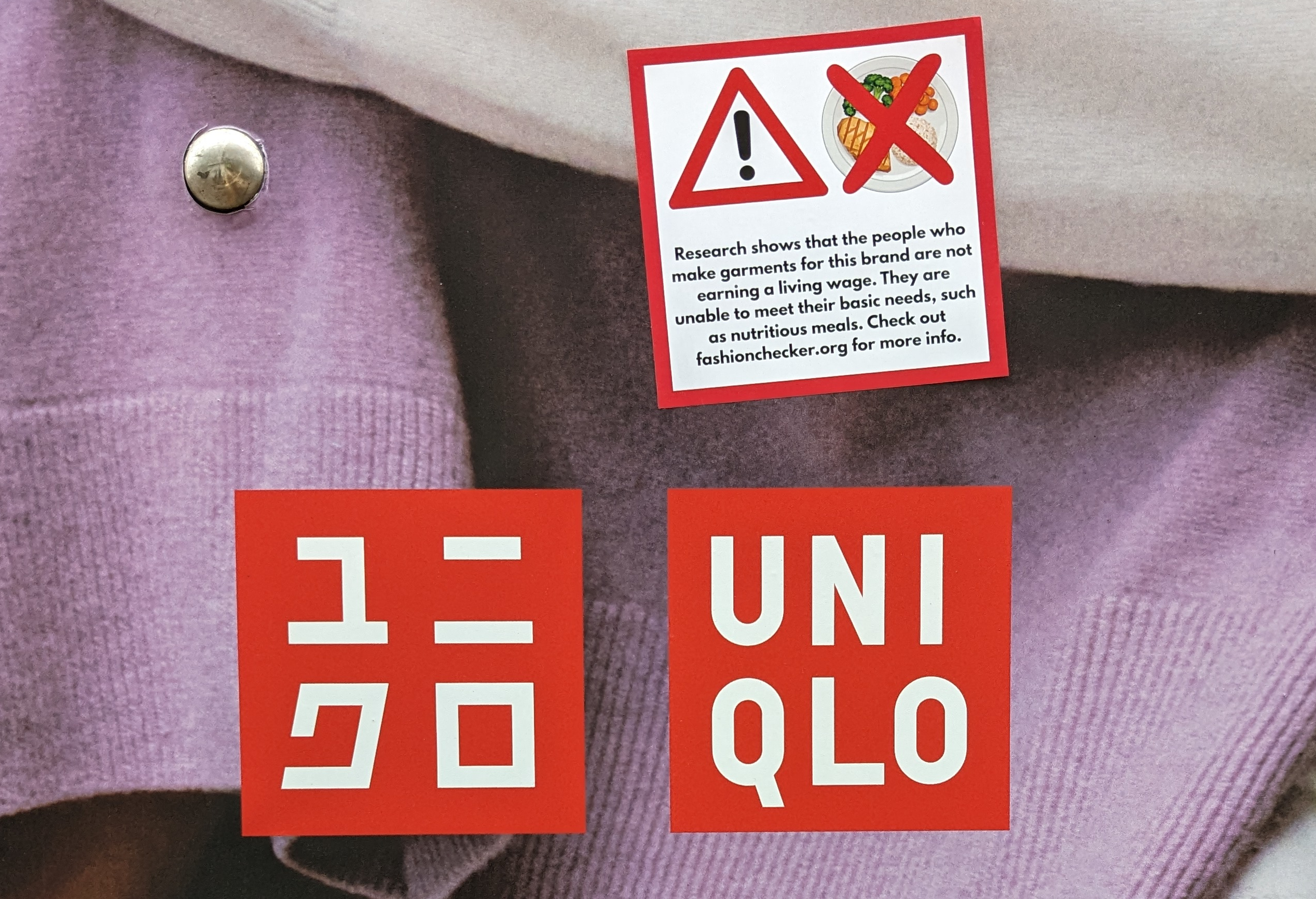
Brands receiving the lowest possible score for living wages include Benetton, Levi's, Adidas, Uniqlo and H&M.
To support living wage action now, brands must get behind trade union demands for wage increases and actively support new national wage negotiations in production countries.
Concrete ways that brands can support living wage action now are to support trade union demands for wage increases in production countries, including the $250 minimum wage demand in Cambodia and the renewal of minimum wage negotiations in Bangladesh. Further steps brands can take to advance living wages are available in CCC’s Living Wage Roadmap.
Fashion Checker Coordinator Aileen Robinson says:
“Any wage below living wage is a poverty wage, and brands are failing to live up to their promises to provide a decent livelihood to workers and their families. Since the project began in 2019, we have seen only a 3% improvement on brand living wage scores, with 96% of brands currently failing to provide a living wage to any workers. Brands must act now to support wage increases in production countries and back up their commitments and due diligence obligations with meaningful action on living wages.”
Fashion Checker was developed in collaboration with Wikirate, with invaluable research support from a dedicated team of volunteer researchers.
1 Research conducted by Clean Clothes Campaign network organisations between 2023-5
Co-funded by the European Union. Fashioning a Just Transition (FJT) and the Fashion Checker is implemented with the financial support of the European Union. The project contents are the sole responsibility of the Clean Clothes Campaign and do not necessarily reflect the views of the European Union.