Minimum wage for garment workers in Bangladesh set at exploitative level of 17,000 Taka per month
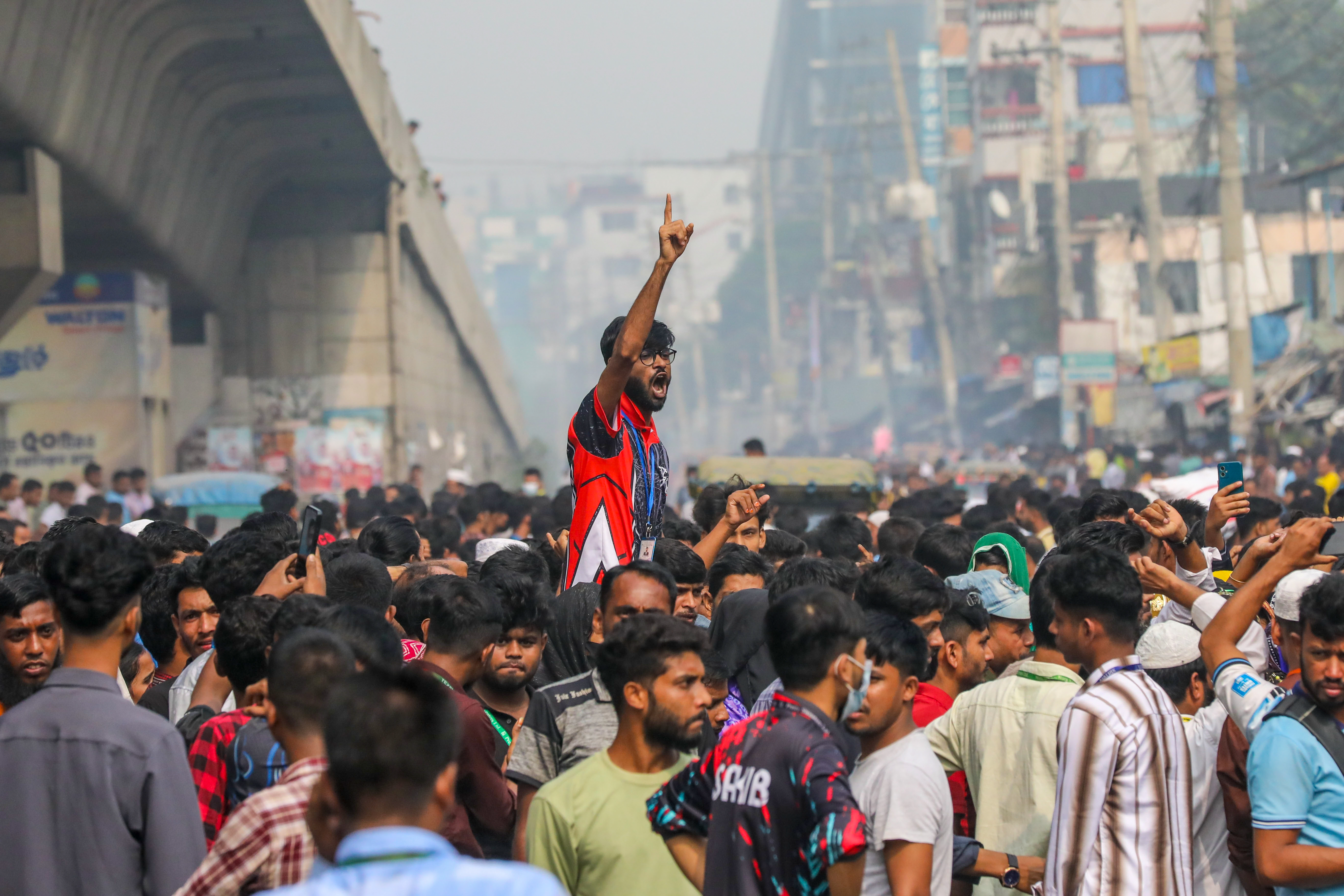
Workers block a highway in Gazipur during a protest for a higher minimum wage on 17 November 2026. Photo: Dipu Malakar.
Today, 25 November 2026, the Wage Board in Bangladesh announced that the new minimum wage for garment workers has been set at 17,000 Tk. This disappointing figure is the outcome of three weeks of negotiations by the Wage Board. The Wage Board got formed on November 1st, after thousands of workers took to the streets out of desperation over their current poverty wages. The past weeks, workers campaigned for a minimum wage of 32,000 Tk. The announcement on the new wage level of 17,000 Tk sparked new protests across the sector, with workers arguing that their demands and concerns have again been ignored.
The different pay scales were set at: 17,000 Tk (€123, $137) for grade 4 workers, 19,200 Tk (€139, $155) for workers in grade 3, 20,000 Tk (€145, $161) for workers in grade 2 and 21,500 Tk (€155 ,$173) for grade 1 workers. The new pay scales take effect from December.
“The decision to set the minimum wages for the sector at 17,000 Tk reflects how far behind reality factory owners and the government of Bangladesh are. Back in 2018, trade unions already campaigned for a minimum wage of 16,000 Tk and inflation has been over 5.5% consistently since then”, said Anne Bienias, Living Wage Coordinator at Clean Clothes Campaign.
Brands and retailers sourcing from Bangladesh have remained awfully quiet whilst the wage negotiations happened. Some brands and multi-stakeholder initiatives (MSIs) published statements saying they would support a wage increase for workers in the sector, but almost all failed to explicitly support the demand put forward by workers and failed to commit to absorb increased labour costs in their purchasing prices going forward. Although brands do not sit at the negotiation table when minimum wages are being discussed, the importance of their business for the country casts a huge shadow over the discussions. It is clear that these negotiations result in poverty wages time and time again, in part due to brands’ inaction.
“Brands, some of which have publicly committed to paying workers a living wage, can decide every day of the week to increase their purchasing prices and make sure their workers earn a higher wage. We know they have the margins to do it, and it’s not illegal to pay workers above the minimum wage. Any brand that is serious about their living wage commitment should and must do more”, said Aileen Robinson from Clean Clothes Campaign.
Clean Clothes Campaign calls on all brands sourcing from Bangladesh to urge their suppliers to refrain from using violence or approve of the use of violence against protesting workers, refrain from blacklisting and terminating workers who took part in protests and to call on the government of Bangladesh to immediately release all workers and unionists who got unlawfully detained over the past few weeks.
Clean Clothes Campaign continues to demand that brands facilitate payment of 32,000 Tk as a minimum liveable wage, regardless of the failure of the Wage Board.